What you need to know
Touch bracelets use a small electrically driven actuator to produce a sensation on the wrist. The sender's gesture becomes a digital instruction; the receiving wearable turns that instruction into vibration. The intensity, duration and pattern depend on the receiving model and its supported features, not on the force with which the sender presses their bracelet.
From movement to a digital cue
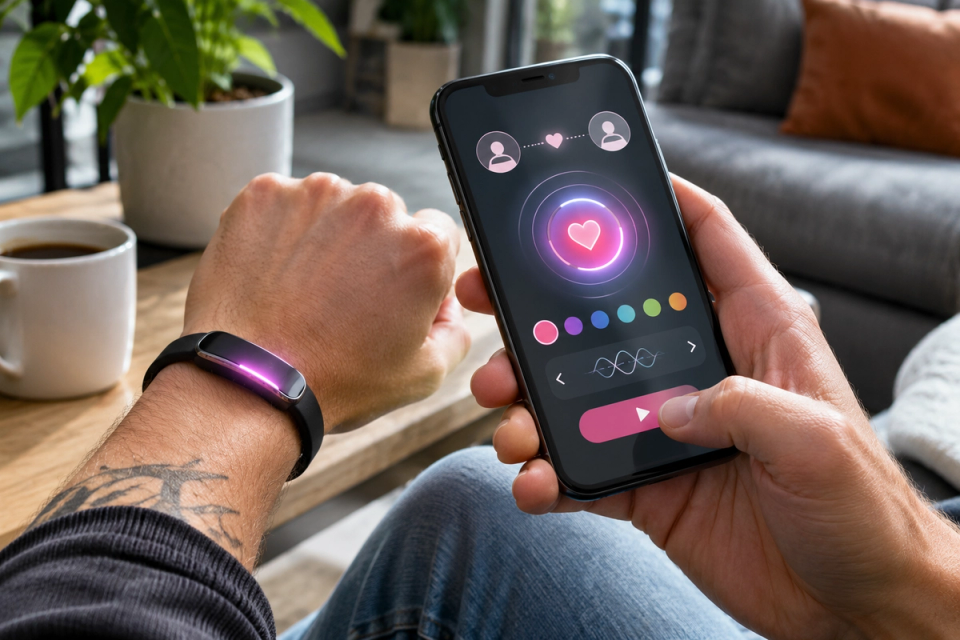
The important distinction is between input and output. A person taps a touch-sensitive surface, and the electronics interpret the action according to the device's rules. The software then encodes an event or sequence that can be sent to a linked account. At the other end, the bracelet's controller activates its vibration hardware. This is a form of haptic feedback: an electronic cue designed to be felt. It does not involve the two bracelets sharing a physical vibration through the air.
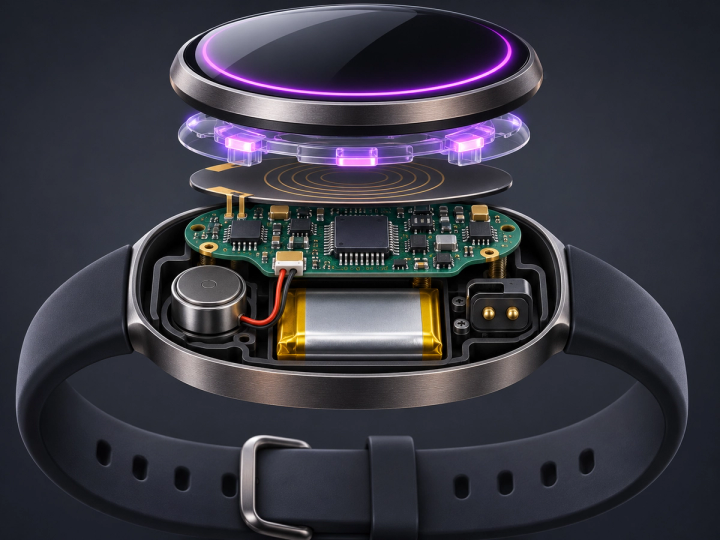
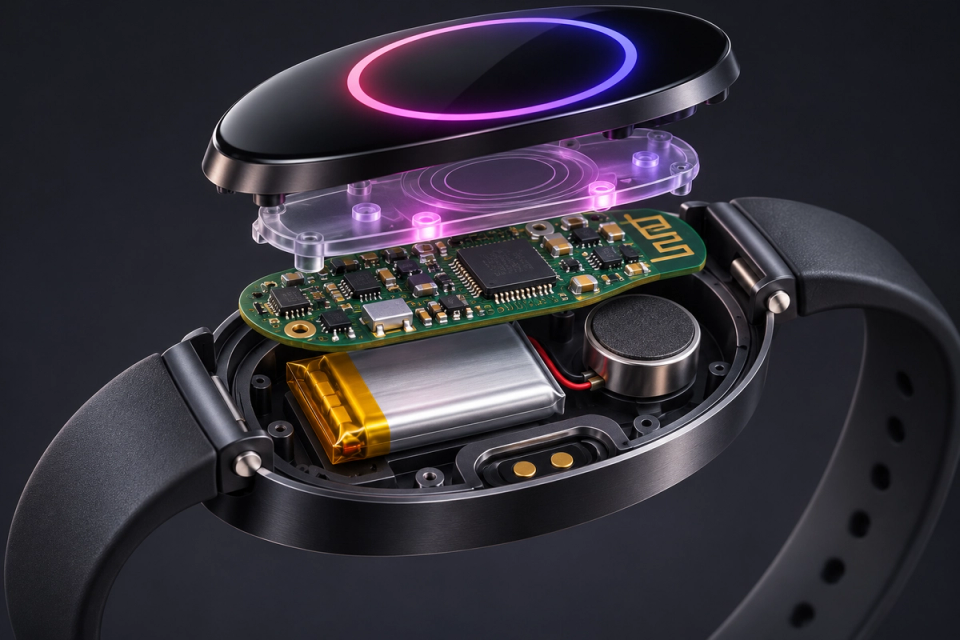
Different wearable designers can use different small actuators. An eccentric rotating mass motor and a linear resonant actuator are common examples in consumer electronics, but we have not dismantled these products or verified which component each manufacturer uses. The conceptual illustration in this article is intended to show the kinds of parts involved, not the actual construction of a named bracelet. The guide to how touch bracelets work explains the rest of the communication chain, including the intermediary smartphones and network.
What a vibration pattern can express
A pulse might mean hello, while several pulses could represent a meaning you have agreed together. There is no universal dictionary. Bond Touch describes a pattern-based interaction on the fourth-generation model; its Mini has different behaviour, including a fixed physical response when paired with another Mini. You should look at the documentation for the exact pairing you intend to use instead of assuming every device reproduces the same gesture.
Totwoo likewise describes light and vibration as ways of conveying a touch, but details can vary by collection. Before choosing a design for somebody else, ask whether they would prefer one predictable cue or the ability to distinguish different signals. The Bond Touch 4 review provides purchase context for a pattern-oriented model, and the Totwoo review discusses the alternative jewellery-oriented approach. Neither review is a substitute for checking current app behaviour before purchase.
Relevant connected jewellery examples
We may earn a commission through affiliate links. These examples are based on manufacturer and feed information, not hands-on tests. Check current availability and compatibility.

Bond Touch 4 — Black (single bracelet)
Fourth-generation touch module with pattern-based signalling. One bracelet; verify partner device and app requirements.
Check price at Bond TouchWhy the same cue feels different
A vibrating device transfers mechanical movement through its case, strap and contact with the skin. A loose bracelet may move differently from a comfortably fitted one. The recipient may notice a cue while sitting quietly but overlook it while carrying shopping or walking briskly. Clothing, movement and the surface against which the bracelet rests can change what is perceptible. These are practical factors, not evidence that a particular product has a weak motor.
Try a short test in ordinary conditions after setup. Ask the recipient whether they felt a single pulse while sitting, then while walking, and finally while the device is covered by a normal sleeve. Do not tighten the strap beyond a comfortable fit to compensate for a missed signal. If the light is visible but vibration seems absent, look for model-specific settings and check whether the device has enough power. A successful light response can help narrow the problem but does not diagnose a defective actuator on its own.
Using vibrations thoughtfully
A quiet tactile cue can be less disruptive than a phone ringtone, but a vibrating module may make an audible sound on a hard desk. Some jobs prohibit jewellery or connected devices for safety or privacy reasons. Take the bracelet off where required, and agree on another means of staying in contact during those periods. Never use a touch bracelet as an emergency alarm or medical alert unless it is specifically designed and certified for that purpose.
The best test of a signal is whether it adds something useful to your routine. Agree on a small number of meanings and treat a missed pulse as ambiguous, not as evidence of rejection. The long-distance communication guide on Left Unsaid discusses how expectations can affect everyday contact. Technology can give you a new way to express affection, but the meaning belongs to the people using it.
For a code-inspired design that uses light and vibration, see the Morse Love bracelet guide for the product-specific selection considerations.
Frequently asked questions
Can a bracelet vibrate continuously?
Do not assume it can; allowable patterns and durations depend on the exact model and software.
Is vibration transmitted directly between wrists?
No. The receiving electronics create a local mechanical sensation after receiving a digital instruction.
Manufacturer sources
Touch Bracelet Technology Library
Complete guide
Main guides
- How Do Long-Distance Touch Bracelets Work?
- Touch Bracelet Connectivity and Distance Explained
- Touch Bracelet Battery Life and Charging Guide
- Touch Bracelet Features and Smartphone Compatibility
Supporting guides
- How Do Touch Bracelets Light Up?
- Do Touch Bracelets Work Without a Phone?
- Do Touch Bracelets Work Without Internet?
- How Far Apart Can Touch Bracelets Work?
- Do Touch Bracelets Work in Different Countries?
- How Bluetooth Works in Touch Bracelets
- How Long Do Touch Bracelet Batteries Last?
- How Long Does It Take to Charge a Touch Bracelet?
- Can You Replace a Touch Bracelet Battery?
- Are Touch Bracelets Waterproof?
- Do Touch Bracelets Work With iPhone and Android?
- Can You Connect More Than Two Touch Bracelets?
- Can Different Brands of Touch Bracelets Connect to Each Other?