What you need to know
A touch bracelet detects an input, sends a digital message through its companion phone and service, and activates a compatible receiver's light or vibration. Both sides normally need a working local Bluetooth connection and internet access. Understanding that sequence helps you choose a device and identify where a missed touch has gone wrong.
From a tap to a message
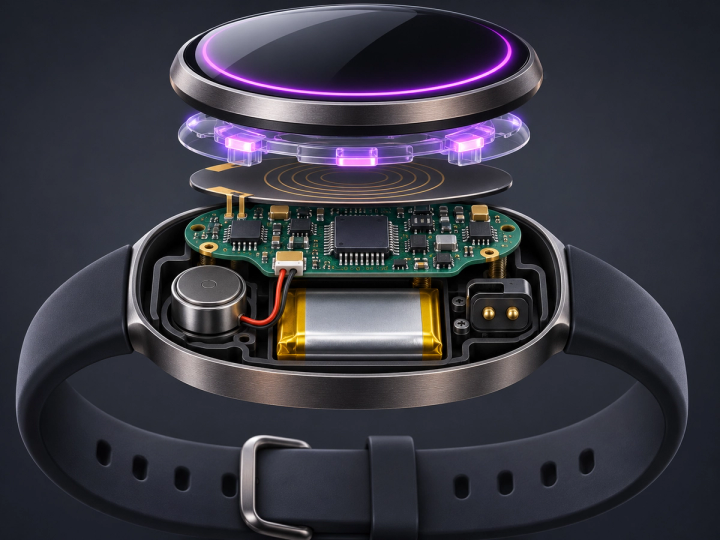
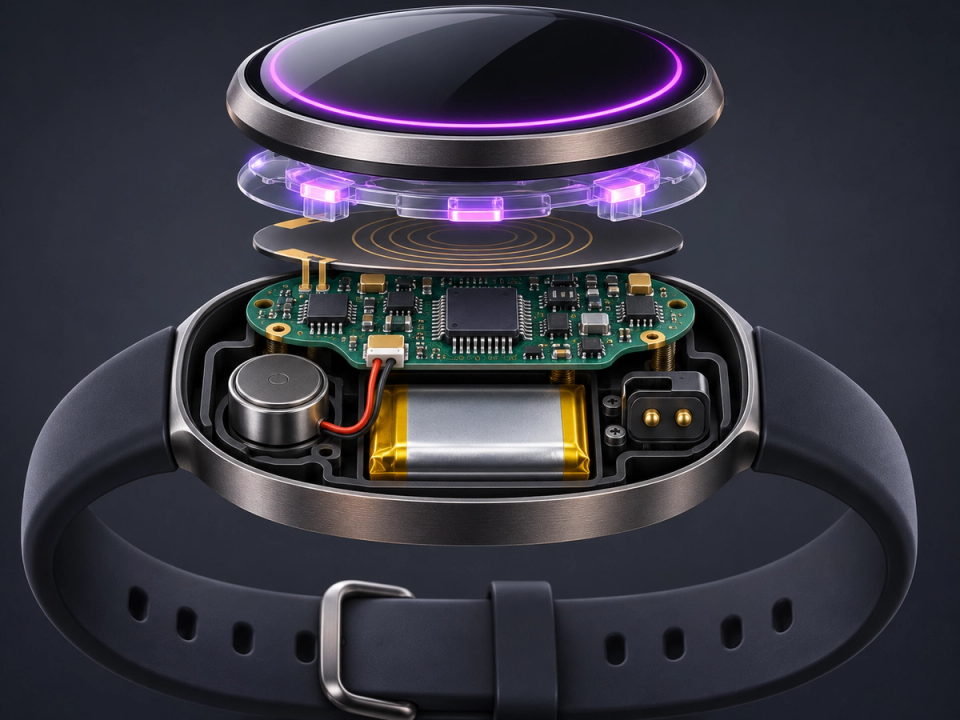
The touch surface is an input rather than a transmitter capable of reaching another country. A controller recognises an interaction and converts it into an event that software can understand. The details of the sensor are proprietary, so a conceptual cutaway should not be read as a teardown of Bond Touch or Totwoo. Some wearables have a wake gesture followed by a pattern; others respond differently. Learn the gesture for the exact model so that an accidental brush of clothing is not confused with an intentional message.
Bond Touch documents a wake-and-pattern interaction for its fourth-generation device. The recipient can experience a sequence of signals that reflects the sender's input. Simpler devices may use a fixed response. The difference matters if you want to communicate several meanings without looking at your phone. Our vibration technology explanation separates the original input from the motor's physical output, while the lighting guide explains why visible colours can be useful alongside a buzz.
How the two smartphones participate
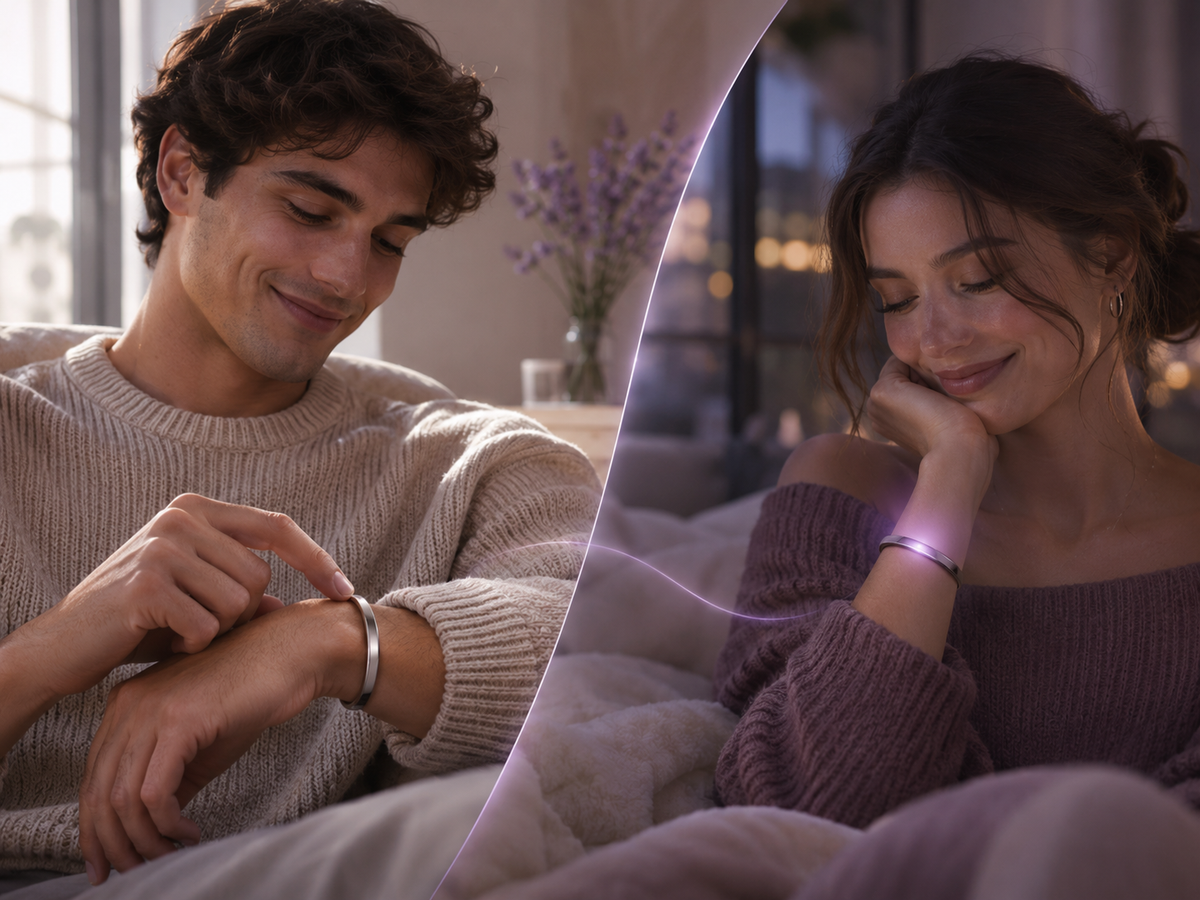
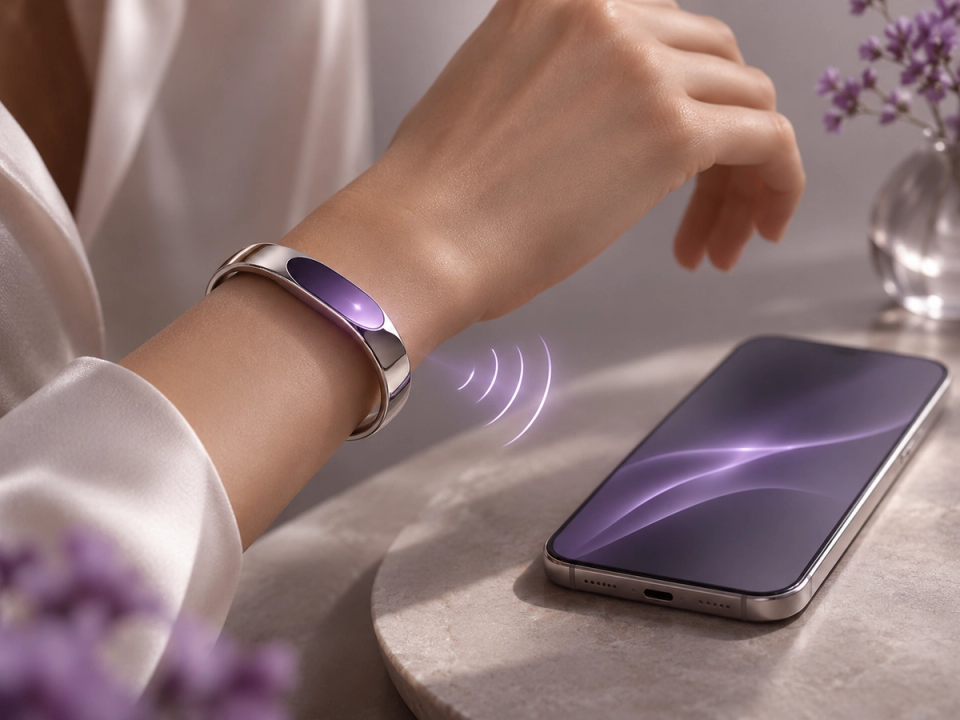
After the local input is recognised, the wearable communicates with its paired phone. The app associates that event with an account and intended recipient. A service then relays it over an internet connection to the other user's app, which passes the relevant instruction to their nearby bracelet. The exact server architecture is not public; this is a functional explanation rather than a claim about a brand's internal protocol.
Consider a person at a café who taps a bracelet while their phone is in a bag. If Bluetooth reaches the phone and the app can access the internet, the message can continue. If the person at the other end has left their phone in a different building, a working internet connection alone cannot establish the last local link. The guide to using bracelets without a phone explains which limitations follow from this architecture. Before blaming the bracelet, check whether the app can actually communicate with its own device.
Relevant connected jewellery examples
We may earn a commission through affiliate links. These examples are based on manufacturer and feed information, not hands-on tests. Check current availability and compatibility.

Bond Touch 4 — Black (single bracelet)
Fourth-generation touch module with pattern-based signalling. One bracelet; verify partner device and app requirements.
Check price at Bond Touch
Totwoo Candy Original Touch Bracelets — Black + Pink
Two-bracelet set with the Totwoo companion app. Manufacturer lists light and vibration signals, Bluetooth connectivity and rechargeable batteries.
Check price at TotwooWhy an acknowledgement is not proof of receipt
A light or pulse on the sending bracelet may acknowledge that an input was recognised. It does not necessarily mean the other person felt anything. A delivery record in the app, if supported, might establish that a message reached a service or phone, but not that it was noticed. A recipient can be asleep, charging their bracelet, in a meeting or wearing a thick sleeve. Do not equate electronic feedback with an obligation to respond.
The best test is to start with both people able to talk through a separate channel. Send one recognisable signal, ask the recipient to report what happened, then repeat in the opposite direction. Test again with the screen locked and the app in its normal background state. This distinguishes a successful setup from a system that only works while both people are actively watching their phones. Avoid repeatedly resetting devices if one direction already works.
Choosing a signal style
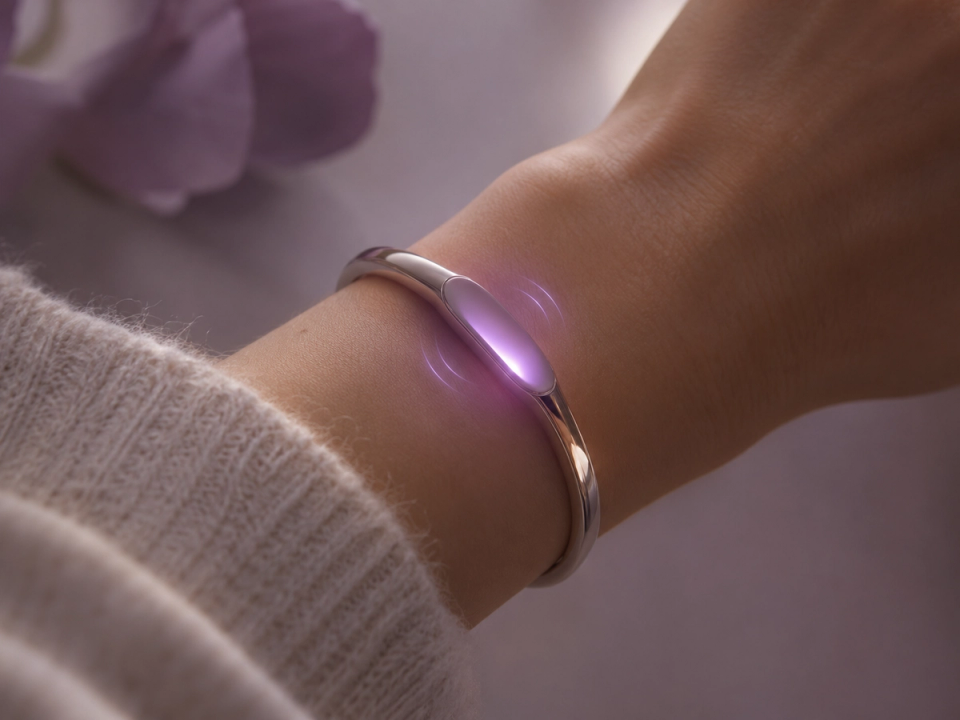
A short vibration can be discreet, whereas a light can be more noticeable in darkness or when the bracelet is sitting on a desk. A sequence of taps may convey a different feeling from a single pulse. Neither design is inherently superior: a person who works in a noisy physical environment might miss small vibrations, while someone in a quiet office may prefer them. A discreet signal is not necessarily silent, especially on a hard tabletop.
For a concrete model-level overview, read the Bond Touch 4 review and Totwoo bracelet review on the main Left Unsaid website. They discuss the consumer choice; the technical library explains the dependencies behind those products. Return to the complete technology guide when comparing the signal mechanism with power, compatibility and range. The important question is not whether the jewellery looks futuristic, but whether its signal is comfortable, recognisable and dependable in the conditions in which both people will use it.
For a practical example of a connected jewellery family, see the Sun & Moon collection guide for the product-specific selection considerations.
For an example of a pattern-based physical device and its available configurations, see the Bond Touch 4 buying guide for the relevant product-specific considerations.
Frequently asked questions
Does a bracelet reproduce the exact pressure of a finger?
Generally no. It produces an electronic output representing a touch or pattern, with behaviour dependent on the model.
Can the sender know whether the recipient felt it?
Not reliably from the bracelet alone. App records and local feedback are not evidence of human attention.
Manufacturer sources
Touch Bracelet Technology Library
Complete guide
Main guides
- Touch Bracelet Connectivity and Distance Explained
- Touch Bracelet Battery Life and Charging Guide
- Touch Bracelet Features and Smartphone Compatibility
Supporting guides
- How Do Touch Bracelets Send Vibrations?
- How Do Touch Bracelets Light Up?
- Do Touch Bracelets Work Without a Phone?
- Do Touch Bracelets Work Without Internet?
- How Far Apart Can Touch Bracelets Work?
- Do Touch Bracelets Work in Different Countries?
- How Bluetooth Works in Touch Bracelets
- How Long Do Touch Bracelet Batteries Last?
- How Long Does It Take to Charge a Touch Bracelet?
- Can You Replace a Touch Bracelet Battery?
- Are Touch Bracelets Waterproof?
- Do Touch Bracelets Work With iPhone and Android?
- Can You Connect More Than Two Touch Bracelets?
- Can Different Brands of Touch Bracelets Connect to Each Other?