From a photograph to a wearable memory
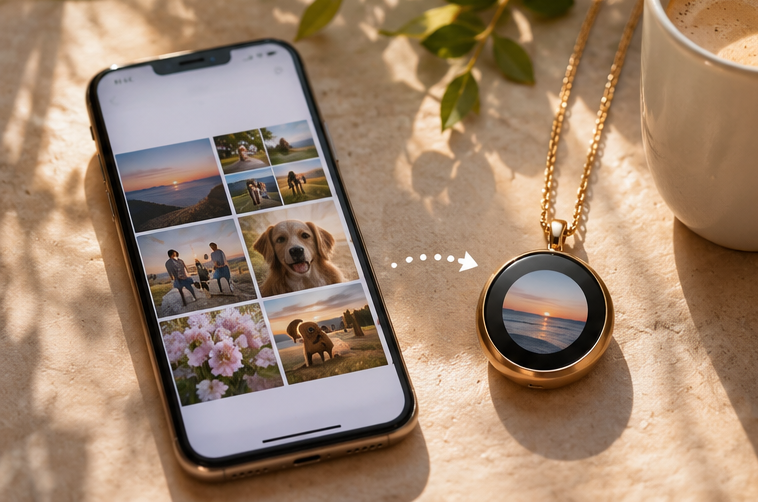
Smart lockets combine a small screen, local storage and a companion app. The phone prepares and transfers the media; the wearable presents a limited selection independently after a successful transfer. Understanding which part of the process happens on the phone and which happens on the pendant helps you avoid expecting features the device was not designed to deliver.
Prepare a picture that works at pendant size
A photograph that looks excellent on a laptop can become almost unreadable when reduced to the size of a necklace screen. Choose a close-up with a recognisable subject and relatively little clutter. Leave enough space around faces so the app's crop does not cut away a forehead or chin. If the picture is a scan of an old print, use an even light source and avoid reflections across the person's face. Keep the high-resolution original in your normal photo collection, then use a copy when experimenting with the app. A locket is not the place to store your only version of a precious photograph.
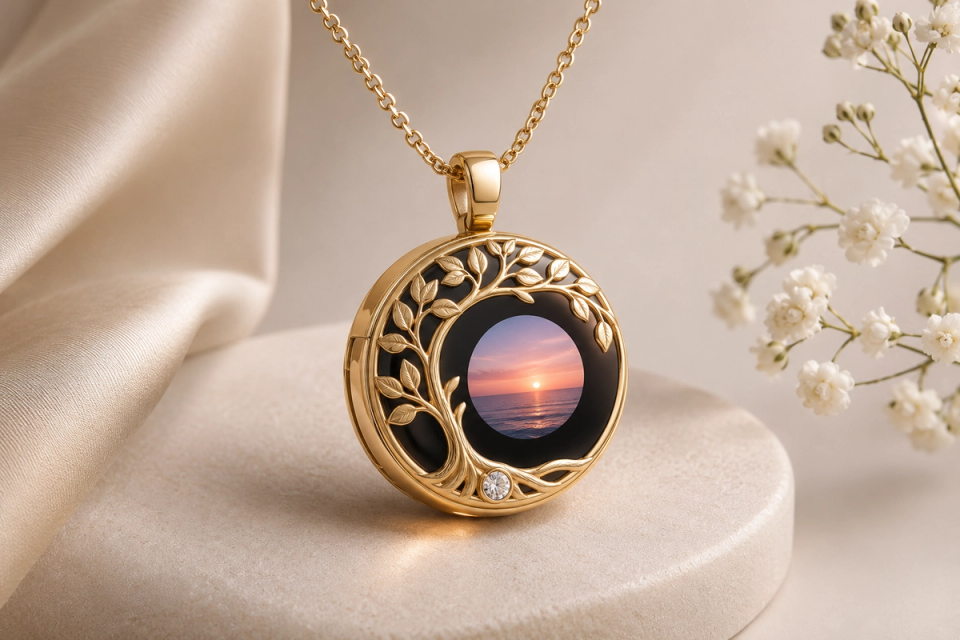
Still images, sequences and actual video
A sequence of still pictures tells a story through selection. For example, a family visit could be represented by an arrival, a shared meal, a favourite walk and a goodbye at the station. A short original clip records a genuine moment with movement. The Totwoo FAQ describes a five-second video limit and silent playback; choose a visual gesture rather than a clip whose meaning depends on hearing a sentence. The How to Upload Photos and Videos to a Smart Locket provides a preparation workflow. A clear still picture may convey more than a tiny video if the subject is small or the camera moves quickly.
Understand AI-generated motion
An AI moving memory is an interpretation generated from a still image, rather than a newly discovered recording. It may invent a blink, facial expression or motion that was never captured. That makes it useful for some creative or celebratory applications but sensitive for memorial use. The How AI Moving Memories Bring Photos to Life discusses when to avoid animation, how to preserve originals and why consent matters. Start with a low-stakes image rather than the only picture of someone you have lost. Review the output before transferring it to the locket; reject a result that changes features in an uncomfortable way.
What actually happens during transfer
Typically the companion app prepares the media and communicates with the necklace over a short-range wireless connection. The manufacturer specifies Bluetooth for adding or changing memories on its Tree of Life model. A phone may still require internet access for account login, cloud processing or an AI generation task. Distinguish a successful upload from a successful viewing test: open the pendant and check that the correct picture appears. The Do Smart Lockets Work Without Internet? explains what still works when a phone is not nearby. If the display shows an old image, do not assume the problem is internet coverage; the update may not have completed.
Privacy starts before the upload
The Smart Locket Privacy and Personal Photo Security covers the limits of local storage claims. Keeping a final image on the necklace does not tell you how the app processes it or whether a third-party AI service receives a copy. For private family images, review the actual permissions and privacy notice before uploading. Ask permission before animating somebody else's face, and avoid using intimate pictures on a device which might be opened by another person. The recipient of a gift should also know how to remove the existing media. Local playback is convenient, but does not automatically make a device an encrypted archive. The distinction between a physical reminder and live contact is also relevant to choosing a long-distance relationship necklace.
Decide whether the technology is necessary
The Smart Lockets: The Complete Guide compares the practical options. A printed photograph inside a traditional locket has no app dependency. A modern phone photo gallery has better storage and a much larger display. The smart locket sits between those two options: a curated wearable collection that can be changed when the owner wants a different reminder. Choose it for that particular convenience, rather than expecting it to outperform either a smartphone or a traditional heirloom at their own strengths. For technologies that relay live signals or replay a pulse rather than present pictures, see the connected necklaces guide.
Frequently asked questions
Does AI recreate what actually happened?
No. A generated animation is a synthetic interpretation of an image, not authentic footage.
Can I store an entire video album?
A small pendant has limited media capacity. Check the current model limits before buying.
Sources
Smart Lockets Library
Complete guide
Main guides
- Totwoo Tree of Life AI Smart Locket: Features, Benefits and Limitations
- Smart Lockets as Meaningful Personalised Gifts
- Smart Locket Setup, Maintenance and Troubleshooting
Supporting guides
- Smart Lockets vs Traditional Photo Lockets
- Totwoo Smart Locket: Gold vs Silver
- Digital Photo Lockets vs Heartbeat Necklaces
- How AI Moving Memories Bring Photos to Life
- How to Upload Photos and Videos to a Smart Locket
- Do Smart Lockets Work Without Internet?
- Smart Locket Privacy and Personal Photo Security
- Smart Lockets for Long-Distance Relationships
- Smart Lockets for Mothers and Grandmothers
- Smart Memorial Lockets for Remembering Loved Ones
- Smart Lockets for Remembering Pets
- Smart Locket Battery Life and Charging Guide
- Smart Locket Not Connecting: Bluetooth and App Troubleshooting
- Are Smart Lockets Waterproof? Everyday Care and Protection