Will a power bank replace the original bracelet charger?
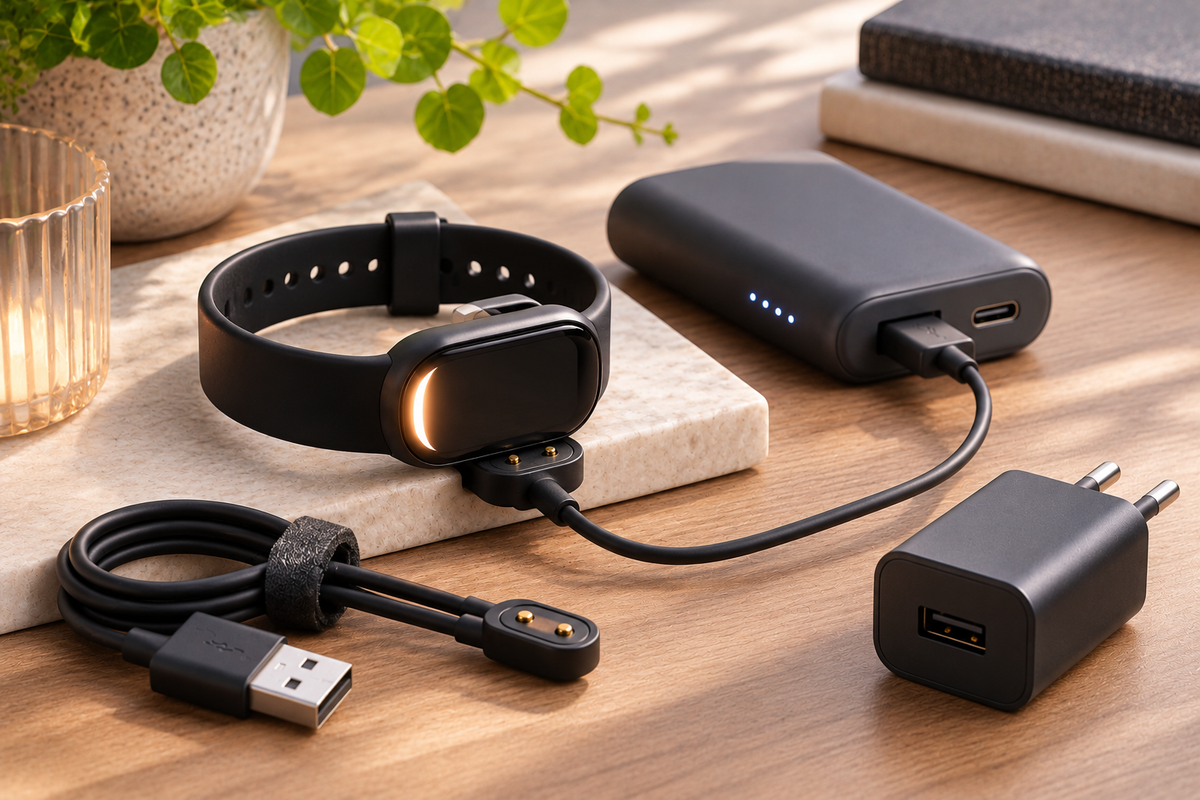
A power bank can be useful only if it provides an appropriate output to the bracelet's official charger. It is not a substitute for the model-specific charging connector.
Separate the source from the wearable charger
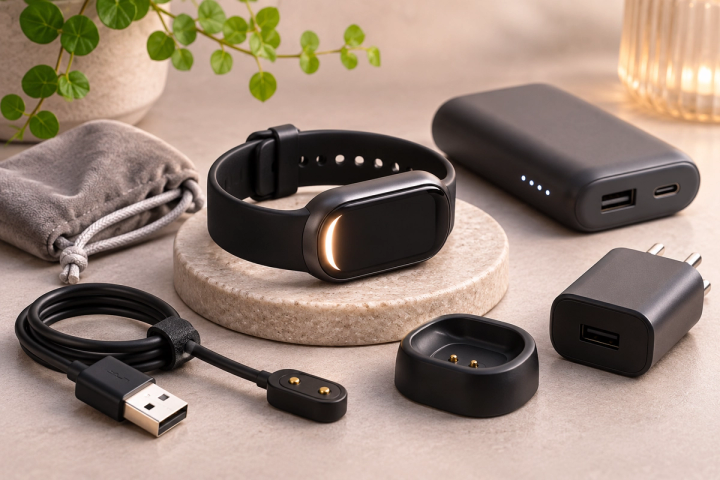
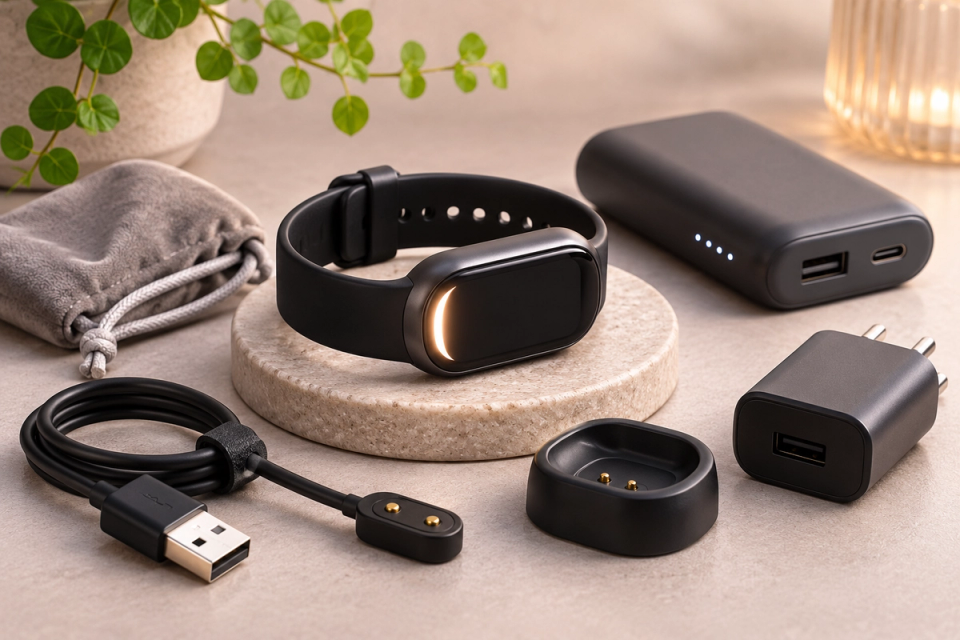
A power bank stores energy and provides an external output through its supported ports. It does not automatically know how to connect to the electronics of a touch bracelet. The manufacturer's charger or charging dock is still the part intended to meet the wearable. This distinction is important because a portable USB source and a proprietary charger perform different roles.
The charging accessories guide explains how to identify the dedicated charging component. If a bracelet's official charger accepts an appropriate USB supply, a suitable power bank may provide that supply. Check the manufacturer's requirements rather than assuming that any product advertised as a universal travel charger will work. Do not connect the bracelet directly to improvised wires or adapters.
Before packing for a trip, check whether the power bank has the port needed by the original charging equipment. For example, the Bond Touch 4 accessory is identified as a magnetic USB-C charger, whereas particular Totwoo products use a dedicated dock or another magnetic arrangement.
Check the power source requirements
Read the wearable charger's instructions and the power bank's stated output capabilities. Compare the specified voltage and connection type. Some portable power banks support multiple output modes, and their headline maximum wattage does not tell you everything about the behaviour of each port. Use only an output the bracelet charger is intended to accept.
Totwoo's official manuals specifically discuss its standard five-volt charger requirements and caution against unsuitable fast-charging adapters. If your power bank cannot provide the appropriate arrangement, use another confirmed compatible source rather than trying to force a particular charging mode.
For Bond Touch and other brands, consult the exact product documentation rather than transferring the Totwoo requirement to every model. A high-capacity power bank is not inherently a more suitable source for a small wearable. The correct electrical and physical compatibility is more important than its advertised capacity.
Understand automatic switch-off
Some power banks stop supplying power when their connected load is very small. A wearable may consume much less power than a phone, especially as charging nears completion. If a compatible arrangement starts charging and then stops prematurely, the source's automatic shut-off behaviour could be one possible explanation.
Look at the power bank's own instructions to see whether it has a supported low-current charging function. Do not try to defeat its protection mechanism with modified cables or additional electrical components. If the portable source cannot maintain a charging session using its intended controls, choose another confirmed compatible arrangement.
Test the setup when you are not dependent on it. Use the original bracelet charger, connect it to the appropriate output and observe the manufacturer's expected charging indication. Afterwards check whether the module actually operates with its increased battery level. A light on the power bank alone does not demonstrate that the bracelet charged successfully.
Prepare the arrangement for travel
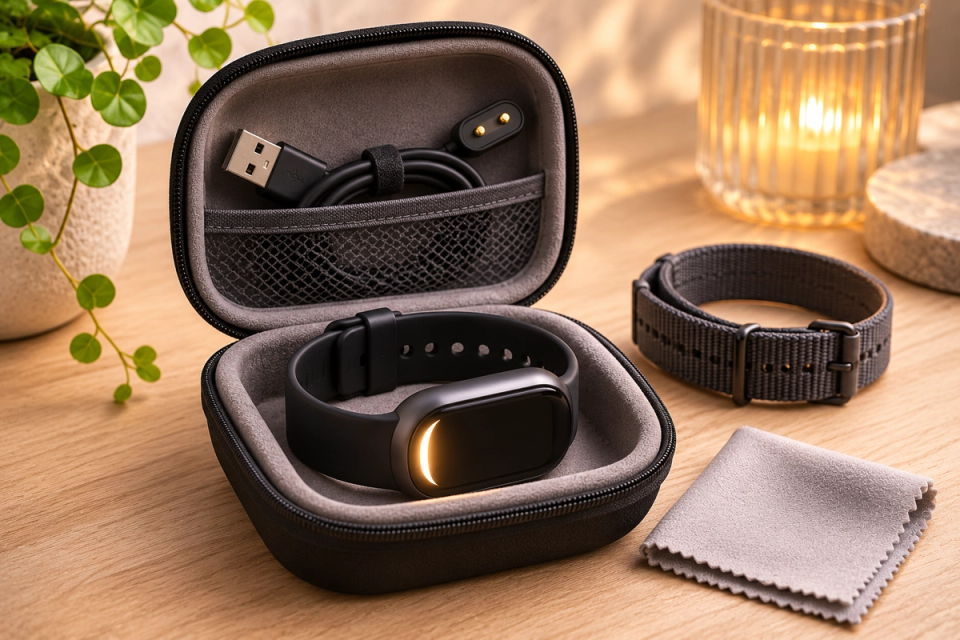
Keep the portable battery and the bracelet charger protected from damage in transit. Pack the dedicated charging accessory where you can easily identify it rather than leaving its small connector loose among metal objects. Use a stable dry surface when charging and avoid compressing the connected equipment in a crowded bag.
If you will travel by air, check the carrier's applicable rules for power banks and spare lithium batteries before departure. Those rules can depend on the battery's rating and the carrier's current policies. The fact that a power bank can charge a wearable does not establish that it may be carried or used in every travel situation.
Do not continue using equipment that is swollen, unusually hot, physically damaged or visibly wet. If a charger was damaged during a journey, replace it through the appropriate manufacturer route rather than attempting a temporary electrical repair.
Decide whether portable charging is necessary
For a short outing, the existing charge may be sufficient depending on the model and actual use. For longer periods away from a suitable wall supply, portable charging can be useful if tested beforehand. The battery life and charging guide explains the difference between published runtime and everyday usage.
The Left Unsaid Bond Touch 4 review gives context about that model's charging routine. Do not buy a power bank solely for a bracelet without establishing that its normal charger can use the intended output. A reliable charging arrangement is one that follows the device requirements, fits the actual journey and can be verified before you need it.
Frequently asked questions
Will a power bank replace the original bracelet charger?
No. It may supply suitable USB power to the original or approved charging accessory.
Why might charging stop after a short time?
Some power banks switch off under a small load. Check the supported low-current behaviour and the wearable's instructions.
Manufacturer guidance and further information
Accessories & Maintenance Library
Complete guide
Main guides
- Touch Bracelet Replacement Straps and Bands
- Touch Bracelet Chargers and Charging Accessories
- How to Clean and Care for Touch Bracelets
- How to Extend the Lifespan of Touch Bracelets
Supporting guides
- Silicone vs Metal vs Fabric Touch Bracelet Bands
- How to Change a Bond Touch Bracelet Band
- Can You Replace a Totwoo Bracelet Strap?
- Touch Bracelet Strap Compatibility Guide
- Bond Touch Replacement Chargers and Cables
- Totwoo Replacement Chargers and Cables
- How to Clean a Bond Touch Bracelet
- How to Clean Totwoo Jewellery
- How to Protect Touch Bracelets from Sweat and Moisture
- How to Store Touch Bracelets When Not in Use
- How to Extend Touch Bracelet Battery Health
- How to Protect Touch Bracelets from Scratches and Damage
- When Should You Replace Your Touch Bracelet?