Is a water-resistant bracelet safe to charge when damp?
Follow the precise water-resistance and activity restrictions for your bracelet, and dry it before charging. A resistance rating does not cover every liquid or situation.
Understand what a water rating applies to
A touch bracelet combines an electronic enclosure and an exterior accessory. The manufacturer may publish a resistance rating for the module, but that does not necessarily mean every strap, clasp or decorative finish has the same resistance. Start by identifying the exact model and reading the current activity and care restrictions. A rating should not be treated as a general promise that the device can tolerate every exposure.
Our cleaning and care guide explains the distinction between electronics and removable accessories. The water-resistance guide covers the technical ratings separately. For prevention, focus on the conditions in which you actually wear the bracelet: exercise, hand washing, damp clothing or work near water.
Bond Touch publishes IP67 for Bond Touch 4. Totwoo's product care information describes IPX5 for the smart chip covered by that guidance. Check the exact device and specific usage limitations rather than comparing the two numbers as if they were interchangeable permission to swim.
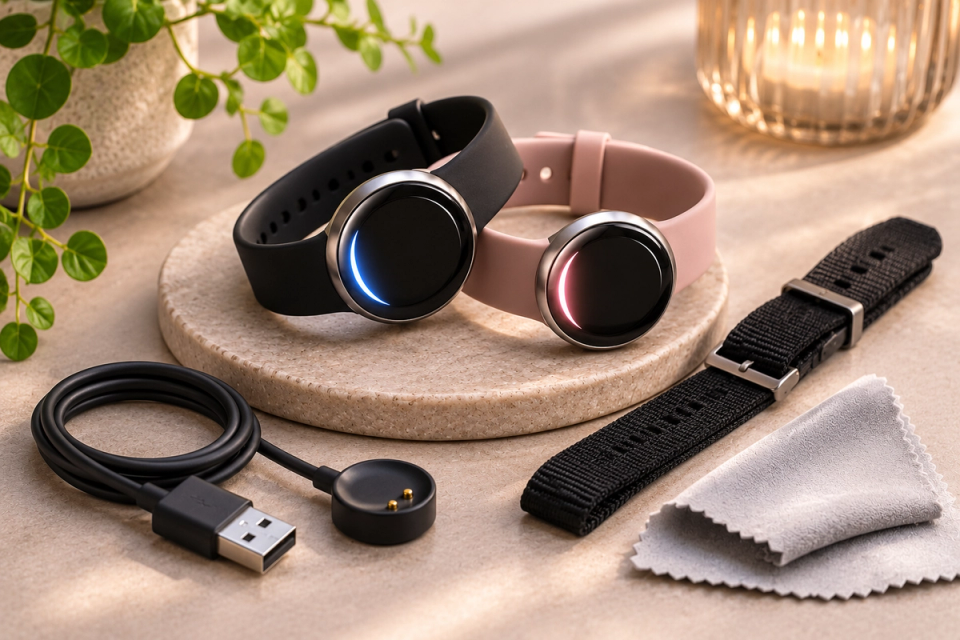
Deal with sweat during ordinary wear
A bracelet worn during exercise can accumulate moisture between the strap and wrist. Take it off when an activity makes wearing jewellery unsuitable or when the manufacturer recommends removal. A comfortable band should not trap unnecessary pressure against the skin. After activity, inspect the strap and module for dampness and follow the approved cleaning method.
A flexible band may be easy to wipe, whereas textile or cord surfaces may hold moisture differently. A metal clasp may also collect residue in areas that are not immediately visible. Do not assume that one material is permanently resistant to all effects of repeated perspiration. Check the specific accessory care instructions.
If the wrist becomes irritated, remove the bracelet rather than wearing it continuously to preserve a touch connection. Allow the skin and accessory to dry as appropriate. For persistent irritation, seek appropriate professional advice. No connected bracelet needs to be worn during every activity to remain meaningful.
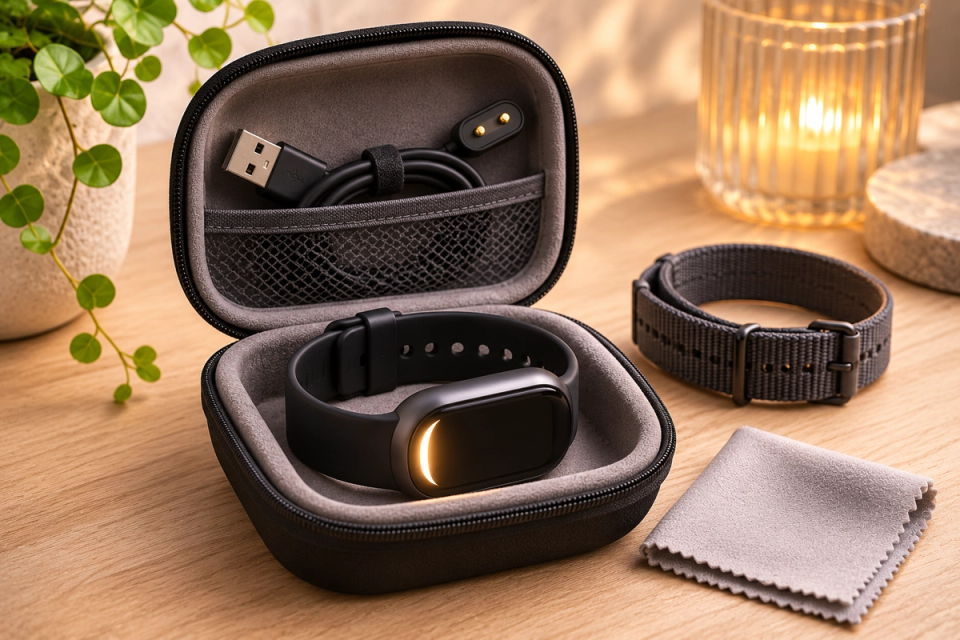
Hand washing, rain and wet environments
Ordinary use can involve incidental splashes, but the conditions of a shower, swimming pool, hot tub or beach may differ substantially from a specified water-resistance test. Soap, salt, chlorine and temperature are additional factors. Review the model's actual usage instructions and remove the wearable when the environment falls outside those conditions.
Do not rely on the fact that the bracelet survived a previous exposure. A fall or damaged housing may affect its condition, and a decorative component can show signs of wear independently of the electronic enclosure. If you see a crack or loose housing, stop wearing it in wet environments and seek support.
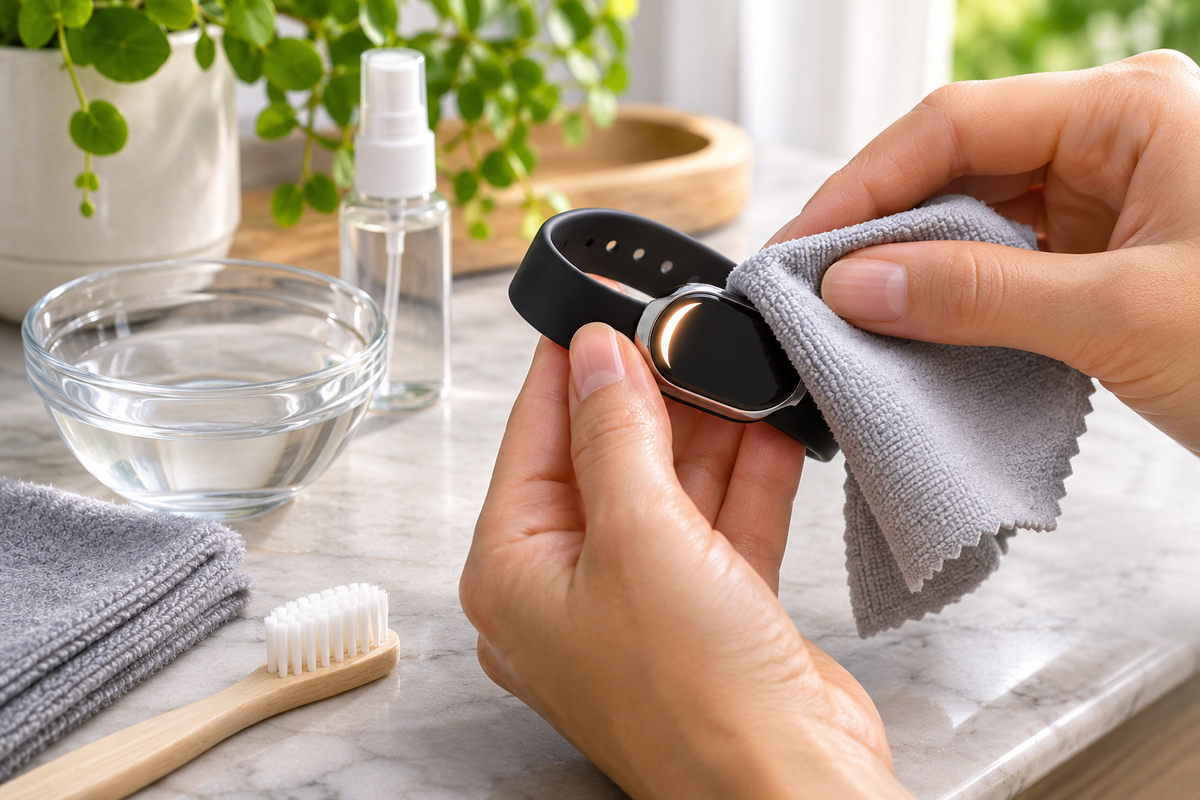
After incidental exposure within the approved conditions, follow the manufacturer's drying guidance. Do not apply a hair dryer or place the device on a hot radiator to speed up drying. Heat can introduce a different risk to the wearable and battery. Use an appropriate dry location instead.
Keep charging surfaces dry
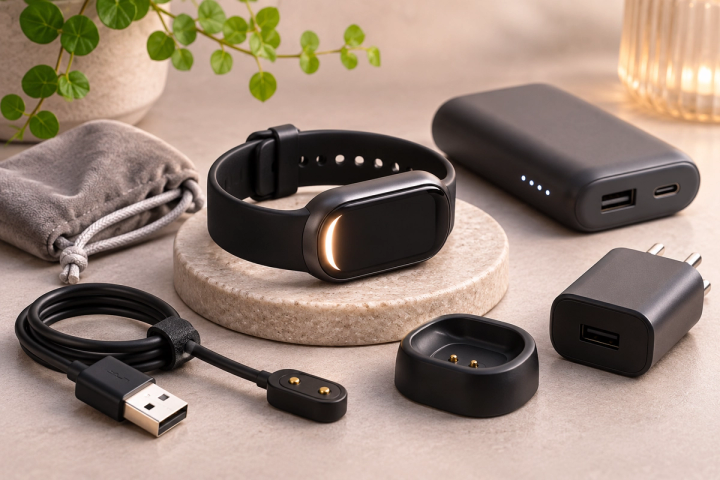
Charging creates a separate concern because a dedicated charger must meet the electronic module. Before connecting it, inspect the relevant surfaces and ensure they are dry according to the instructions. Avoid charging immediately beside a sink, shower or wet towel. Store the charger in a dry compartment, separated from damp cleaning materials.
If the bracelet has been immersed beyond its specified conditions, do not assume that a dry-looking exterior proves the internal electronics are unaffected. Follow manufacturer support advice before attempting to recharge it. If the device is unusually hot, swollen, cracked or visibly damaged, discontinue use.
A power bank or a replacement cable does not make a wet charging arrangement safer. The normal compatible charger still needs a suitable environment and an intact module. This is a practical reason to carry a separate dry pouch when travelling with connected jewellery.
Build prevention into daily routines
Choose a simple place to put the bracelet when washing, showering or performing an activity that might expose it to unsuitable conditions. A soft dry compartment is preferable to a bathroom counter crowded with wet products and hard objects. Check the fastening and housing periodically so that a mechanical problem is not overlooked.
The Left Unsaid Bond Touch 4 review provides broader context about everyday wearable use. Follow the exact maker's guidance rather than transferring a claim about one model to another. The easiest way to maintain a connected bracelet is often to remove it briefly at the appropriate time, then return to your normal routine once it is dry and suitable to wear.
Frequently asked questions
Is a water-resistant bracelet safe to charge when damp?
No. Follow the charging instructions and allow the relevant surfaces to dry completely.
Can I assume a sports band makes the whole device suitable for swimming?
No. The module, band and permitted activity must all be considered separately.
Manufacturer guidance and further information
Accessories & Maintenance Library
Complete guide
Main guides
- Touch Bracelet Replacement Straps and Bands
- Touch Bracelet Chargers and Charging Accessories
- How to Clean and Care for Touch Bracelets
- How to Extend the Lifespan of Touch Bracelets
Supporting guides
- Silicone vs Metal vs Fabric Touch Bracelet Bands
- How to Change a Bond Touch Bracelet Band
- Can You Replace a Totwoo Bracelet Strap?
- Touch Bracelet Strap Compatibility Guide
- Bond Touch Replacement Chargers and Cables
- Totwoo Replacement Chargers and Cables
- Can You Charge Touch Bracelets with a Power Bank?
- How to Clean a Bond Touch Bracelet
- How to Clean Totwoo Jewellery
- How to Store Touch Bracelets When Not in Use
- How to Extend Touch Bracelet Battery Health
- How to Protect Touch Bracelets from Scratches and Damage
- When Should You Replace Your Touch Bracelet?